
Carpal Tunnel Syndrome: Understanding the Pain
Carpal Tunnel Syndrome: Understanding the Pain
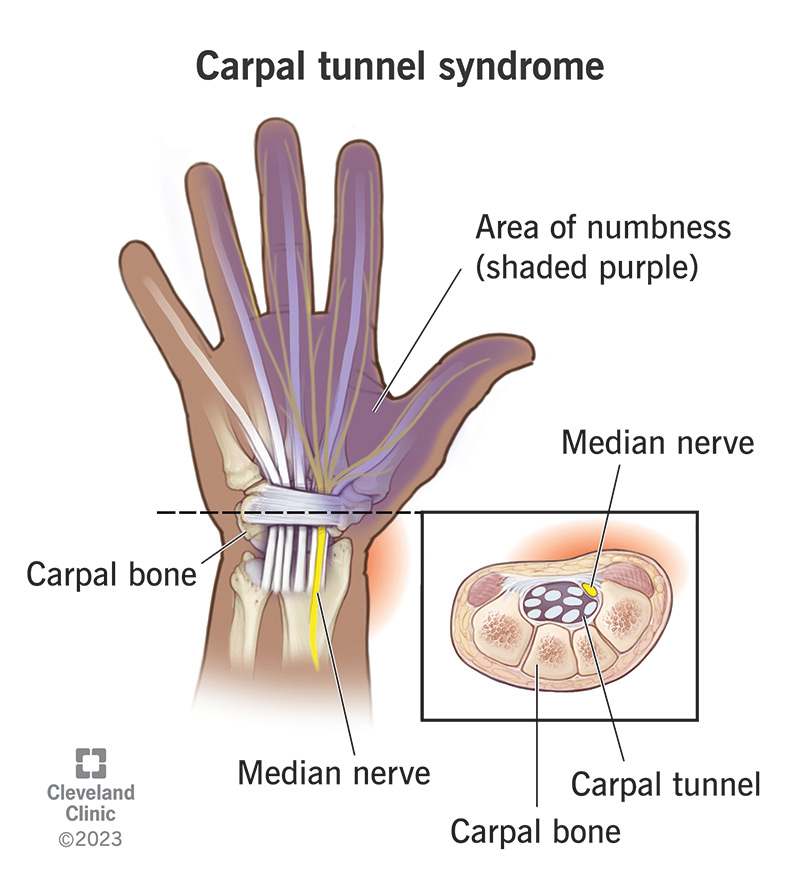
Carpal tunnel syndrome (CTS) occurs when the median nerve in the wrist gets pinched. Along with arthritis, carpal tunnel is one of the most common hand conditions. Carpal tunnel causes weakness and tingling pain in the fingers, which requires proper treatment. Read the following blog to learn more about this condition!
What are the Causes and Risk Factors of Carpal Tunnel?
The main cause of carpal tunnel syndrome is when extra external pressure is placed on the median nerve, a major nerve in the arm that helps with movement. Swelling and/or irritation are main factors that cause the extra pressure. This swelling and irritation can come from external factors such as:
· Arthritis: Pain, swelling, stiffness, and/or inflammation in the joints
· Sprains: Tissue around the bones (ligaments) gets stretched too far or gets torn
· Strains: Overusing, overstretching, or tearing a muscle or tendon
· Fractures: A break in a bone
People with certain risk factors are also more susceptible to developing carpal tunnel. Risk factors can be genetic and/or preexisting health conditions. Some of the most common risk factors include of:
· People who do frequent and repetitive movement of their wrist and hand because this can cause irritation and inflammation
· Pregnant women because of fluid retention and hormonal changes
· Older adults (above the age of 40) because of cumulative wear and tear and longer repetition of hand movement
· Genetics
· Certain medical conditions such as Rheumatoid arthritis, Gout, Hypothyroidism, Diabetes, Obesity, and Amyloidosis
What are the Symptoms of Carpal Tunnel?
Carpal tunnel is known for causing pain and irritation in the wrist, hands, and fingers. Like many medical conditions, the symptoms start gradually and increase with time. Some of the most common symptoms of carpal tunnel are:
· Tingling and Numbness: The feeling of “pins and needles” is common, almost like a minor electric shock. This most commonly occurs in the thumb, index, middle, and ring finger, but not the pinky.
· Muscle Weakness: When a person has carpal tunnel, the numbness causes people to have less strength. Holding objects can become difficult.
· Pain: The pain caused by carpal tunnel is usually the worst during repetitive tasks, periods of activity, and at night.
What are the Effects of Carpal Tunnel?
There are many possible short and long term effects of dealing with carpal tunnel. Having carpal tunnel can make simple tasks difficult due to pain and numbness. People who suffer with carpal tunnel tend to struggle with buttoning shirts, tying shoes, and other everyday tasks. Some of the most common short-term effects include of:
· Constant pain, numbness, and tingling in the hands and fingers
· Loss of grip strength
· Aching in the hand
Some of the most common long-term effects include of:
· Permanent damage of the median nerve
· Loss of muscle strength
· Lack of coordination
Different Kinds of Carpal Tunnel
There are a variety of different conditions that cause pain in the hand, many of which are mistaken for carpal tunnel. However, carpal tunnel doesn’t necessarily have different types, it is known to be in stages: mild, moderate, and severe.
· Mild: Symptoms are not as severe and happen less frequently. Pain and discomfort usually show up after high levels of activity and irritation
· Moderate: Symptoms are more consistent and pain is more intense. It is triggered more quickly, less work and irritation is needed for discomfort to occur
· Severe: Constant symptoms and high levels of pain and discomfort
Treatments for Carpal Tunnel
There are many treatments for carpal tunnel that are used by doctors and surgeons. Many treatments do not require surgery, however it is an option in severe cases. Some treatments include modifying daily routines to support strengthening the wrist again. Some of the most common treatments include of:
· Wearing a Splint or Brace: Using a splint or brace will hold the wrist in a neutral position that restricts movement and takes pressure off the median nerve
· Physical Therapy: Using physical therapy will strengthen the muscles around the wrist, increasing strength and flexibility
· Medications: Certain medications can be over the counter or prescribed by a doctor. These medications will reduce pain and lower the inflammation
· Corticosteroids: Prescription anti-inflammatory medications from a doctor
· Surgery: If other treatments don’t work, a surgeon can perform a carpal tunnel release to create more space inside the wrist.
Citations:
Clinic, Cleveland. “How Do I Know If I’m Getting Carpal Tunnel Syndrome?” Cleveland Clinic, 12 Jan. 2024, https://my.clevelandclinic.org/health/diseases/4005-carpal-tunnel-syndrome
Staff, Mayo Clinic. “Carpal Tunnel Syndrome.” Mayo Clinic, Mayo Foundation for Medical Education and Research, 6 Feb. 2024, https://www.mayoclinic.org/diseases-conditions/carpal-tunnel-syndrome/diagnosis-treatment/drc-20355608
European, NHS. “Carpal Tunnel Syndrome.” NHS Choices, NHS, 17 Apr. 2024, https://www.nhs.uk/conditions/carpal-tunnel-syndrome/


Comments